

Podcast Summary
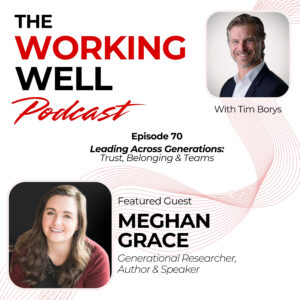
In this episode of the Working Well Podcast, host Tim Borys sits down with generational researcher and author Meghan Grace to explore the realities of leading in today’s multigenerational workplace. With four (soon five) generations working side by side, leaders face the challenge—and opportunity—of navigating diverse expectations, communication styles, and motivations.
Meghan distills over a decade of research into practical strategies for building trust, psychological safety, and belonging across generations. She explains how life stage and cohort experiences shape perspectives, why stereotypes miss the mark, and how leaders can “toggle” between universal leadership principles and generational nuance.
The conversation is a roadmap for leaders who want to engage, retain, and inspire multigenerational teams in a time of rapid change and disruption.
✅ Key Takeaways
-
Life Stage vs. Generational Effect: Not every behavior is generational—sometimes it’s simply part of human development.
-
Trust and Belonging Matter Most: Regardless of age, people want to feel safe, valued, and connected at work.
-
Avoid Generational Stereotypes: They can obscure the strengths and perspectives each cohort brings.
-
Expectation Setting Builds Trust: Transparency and clarity are critical across all age groups.
-
Adaptability is Non-Negotiable: Younger generations embrace rapid change, while older cohorts may resist—leaders must help bridge this gap.
-
Toggle Leadership: The best leaders know when to apply universal principles and when to adapt to generational needs.
Episode Links & Resources
Connect with Meghan here:
Website: meghanmgrace.com
Institute4gens.org
LinkedIn: https://www.linkedin.com/in/meghanmgrace/
New Book: Generations in the World of Work
Podcast Highlights
Please note: This highlight is generated by a computer and may contain errors.
Introduction: The Generational Leadership Challenge
What does it take to lead four generations in today’s workplace? Host Tim Borys introduces guest Meghan Grace, generational researcher and co-author of Generations in the World of Work. She brings a decade of insights into how leaders can build thriving multigenerational teams.
Life Stage vs. Generational Impact
Meghan explains the difference between life stage development (things every 19-year-old experiences) and generational cohort effects (shaped by major events, technology, economy, and culture during formative years). Understanding this distinction helps leaders avoid mislabeling behavior.
Loyalty, Change, and Fear of Uncertainty
Earlier generations entered stable job markets with pensions and long-term security. Today’s younger workers came of age in an era of layoffs and rapid change, shaping their views on loyalty, risk, and career paths.
The Pace of Change
Millennials and Gen Z have grown up in an environment of constant disruption. Meghan notes: “This is the slowest pace of change we will ever experience moving forward.” Gen Z, in particular, is pushing back against burnout by prioritizing wellbeing alongside performance.
Universal Human Drivers
Despite generational differences, research shows that all employees—Boomers to Gen Z—value:
-
Fair pay
-
Meaningful work
-
Trust and psychological safety
-
A sense of belonging
Stereotypes vs. Strengths
Meghan warns against “generational slander.” While stereotypes (like avocado toast) may be lighthearted, leaders must avoid boxing people in. Instead, they should practice empathetic listening to uncover the unique strengths and perspectives each generation brings.
Building Trust Across Generations
Trust is built through clarity, consistency, and expectation-setting. Meghan stresses that unspoken norms often cause conflict. Leaders must communicate expectations explicitly and treat them as two-way agreements.
Preparing for Gen Alpha
Looking ahead, Meghan predicts that Gen Alpha will be even more tech fluent—but success will hinge on human skills like empathy, communication, and collaboration. Leaders must prepare by cultivating both tech literacy and “human literacy.”
Closing Thoughts: Toggle Leadership
Meghan closes with advice: great leaders learn to toggle between universal leadership practices and generational nuance. It requires curiosity, empathy, and daily practice of listening, reflecting, and adjusting.